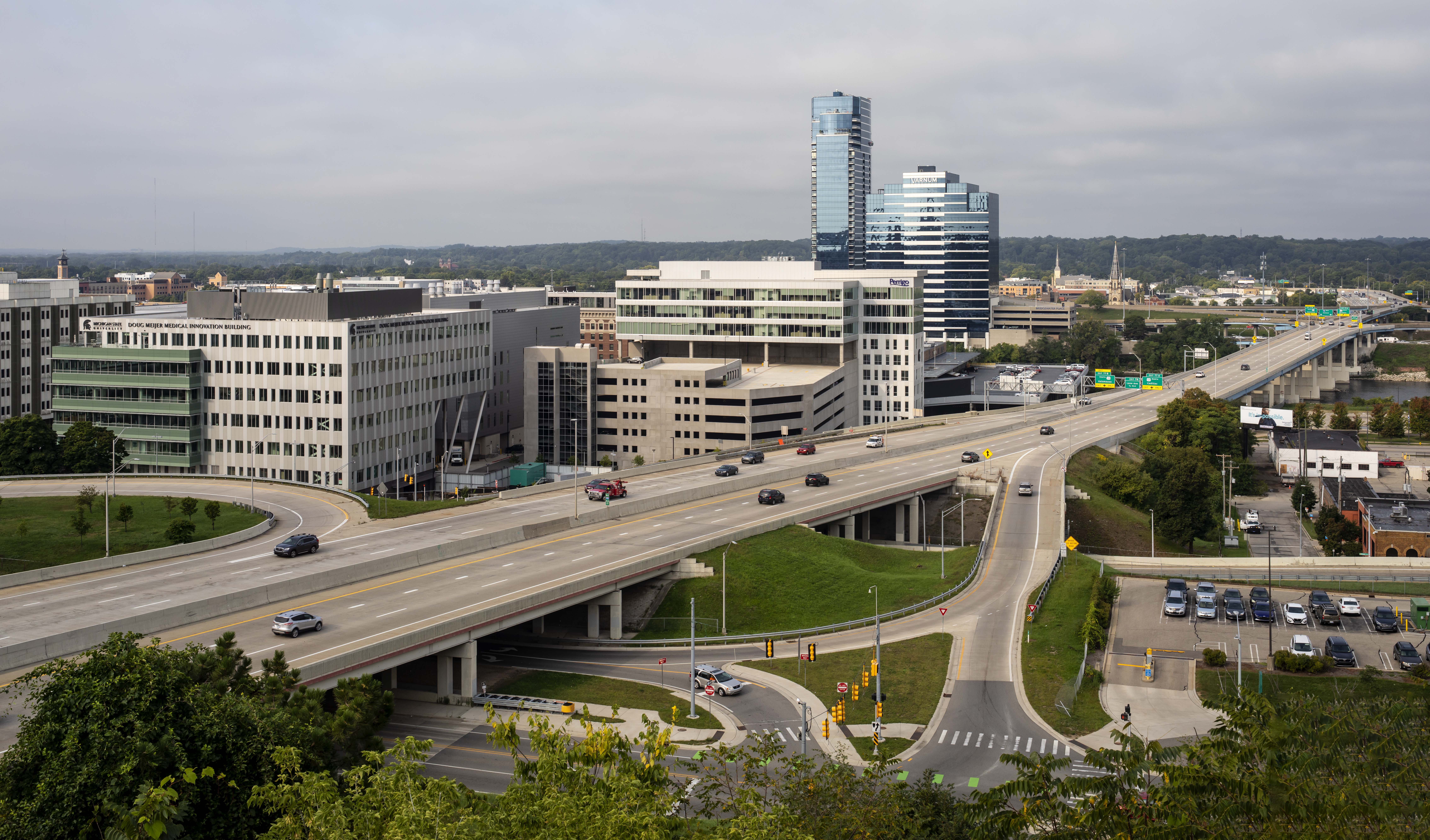

In downtown Grand Rapids, where space is tight and urban activity is constant, building upward requires more than technical expertise. It demands creativity, precision and collaboration. Rockford has met those challenges through a portfolio of complex high-rise projects that push conventional boundaries. From reinventing façade-replacement methods to building atop active structures and advancing sustainable practices, projects like the Amway Grand Plaza Reclad, Corewell Health Place, and Studio Park Tower illustrate how innovation and execution come together to shape the city’s skyline.
Amway Grand Plaza Hotel
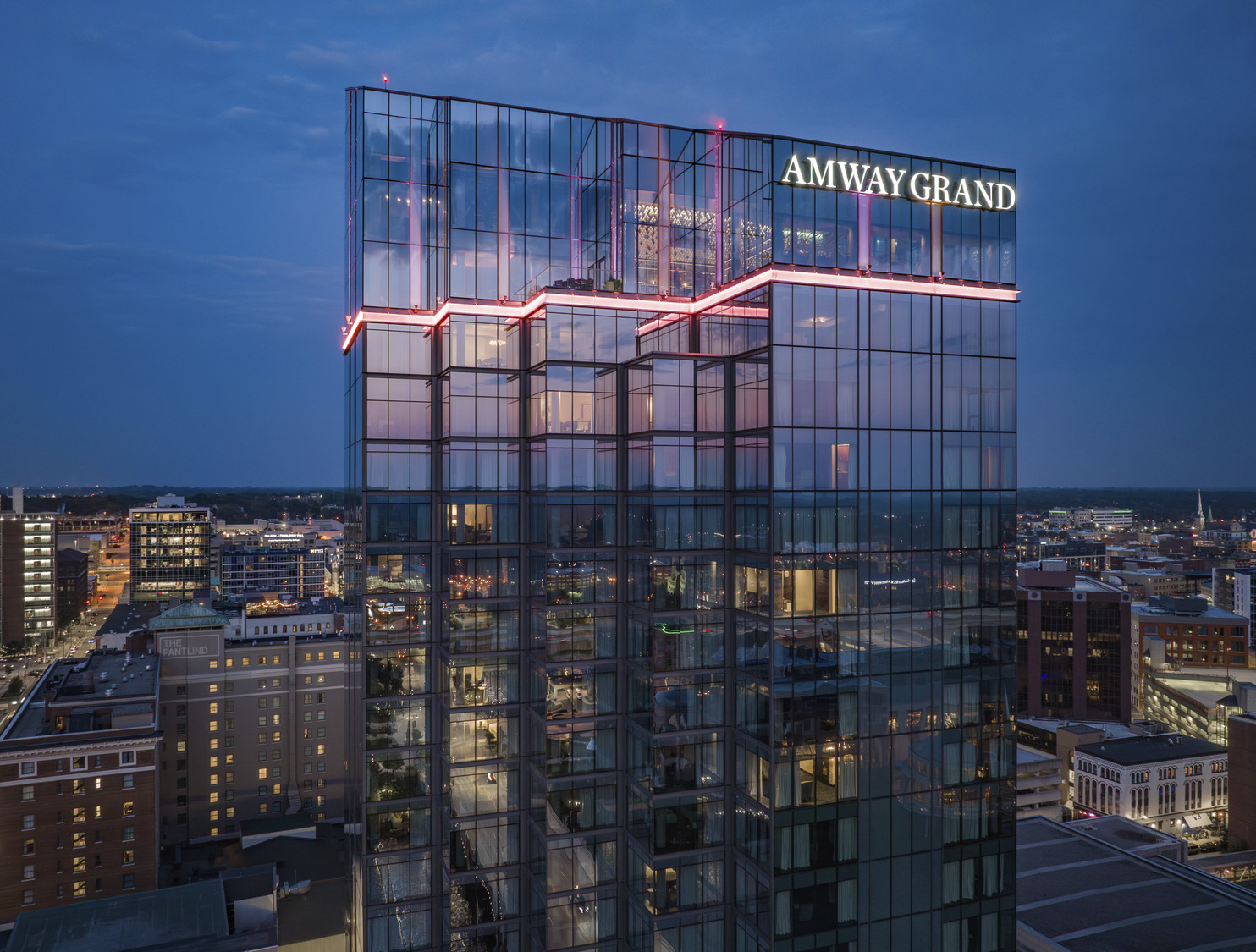
The Amway Grand Plaza Hotel is one of Grand Rapids’ most recognizable landmarks and one of its most technically demanding renovation projects. Rockford was tasked with replacing 96,500 sq. ft. of an aging curtain wall system while the hotel remained fully open and operational. Traditionally, curtain wall replacement happens from the bottom up, requiring entire vertical sections of rooms to be taken offline. For a fully booked hotel, this would have caused significant disruptions.
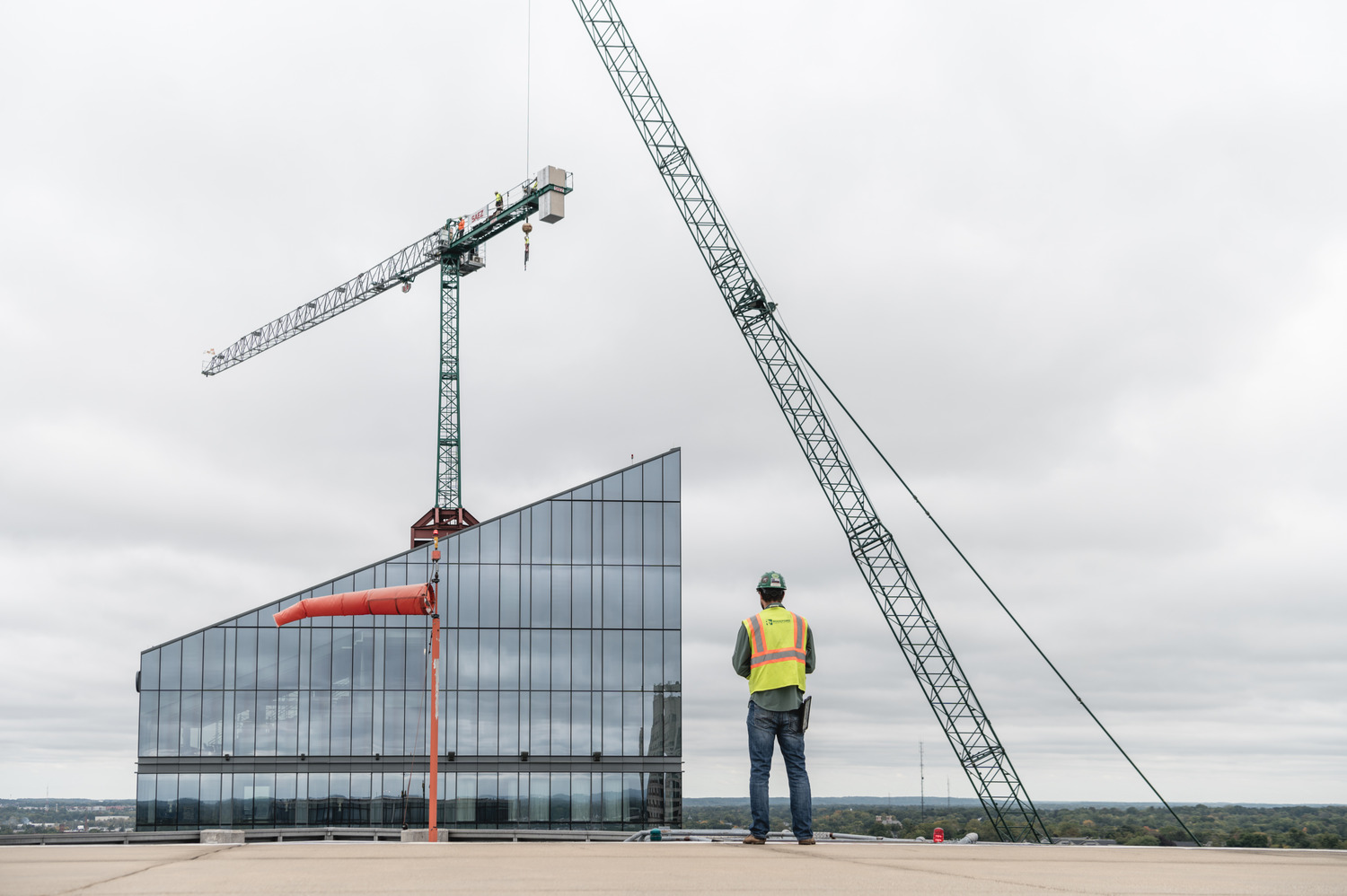
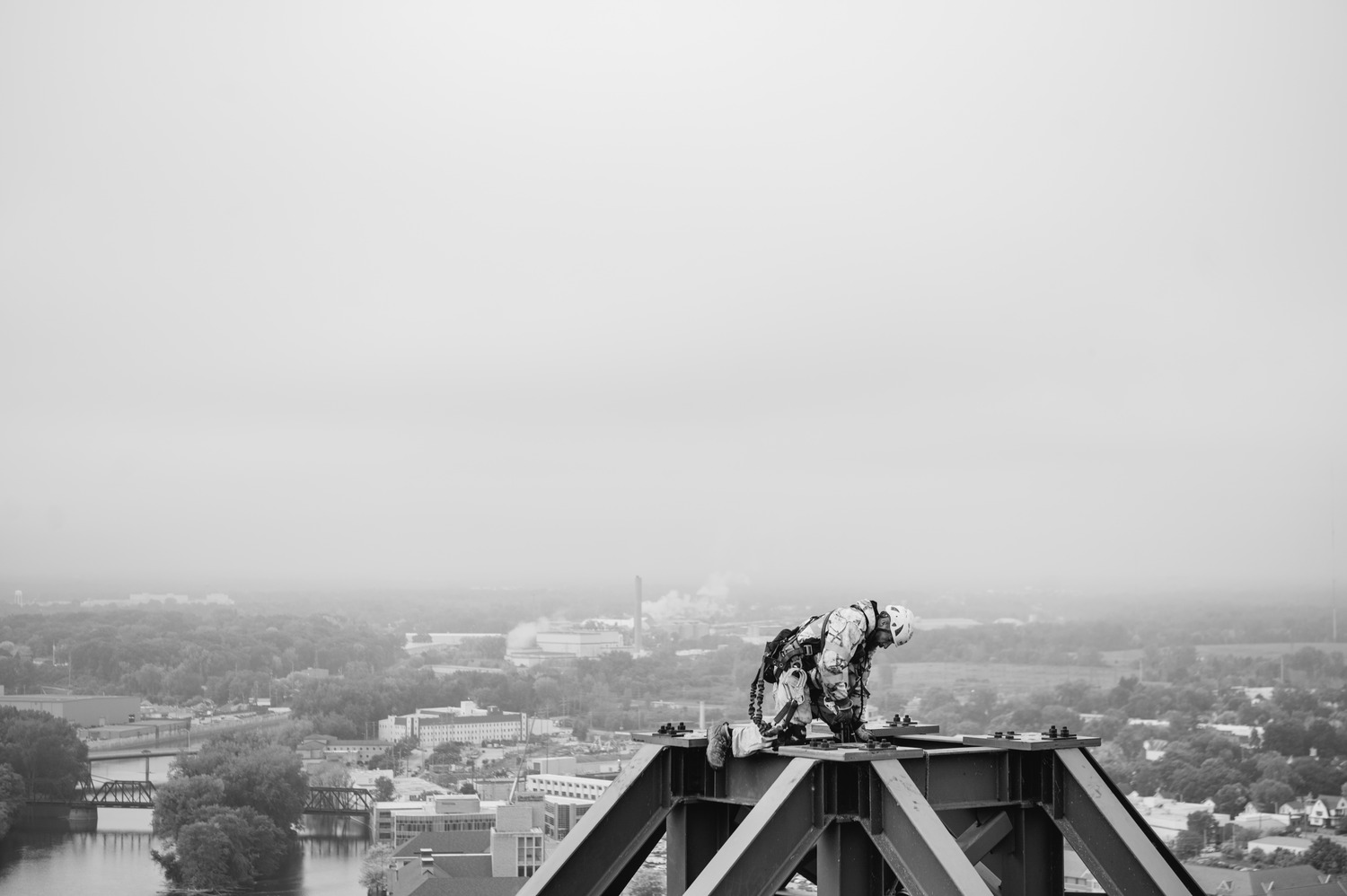
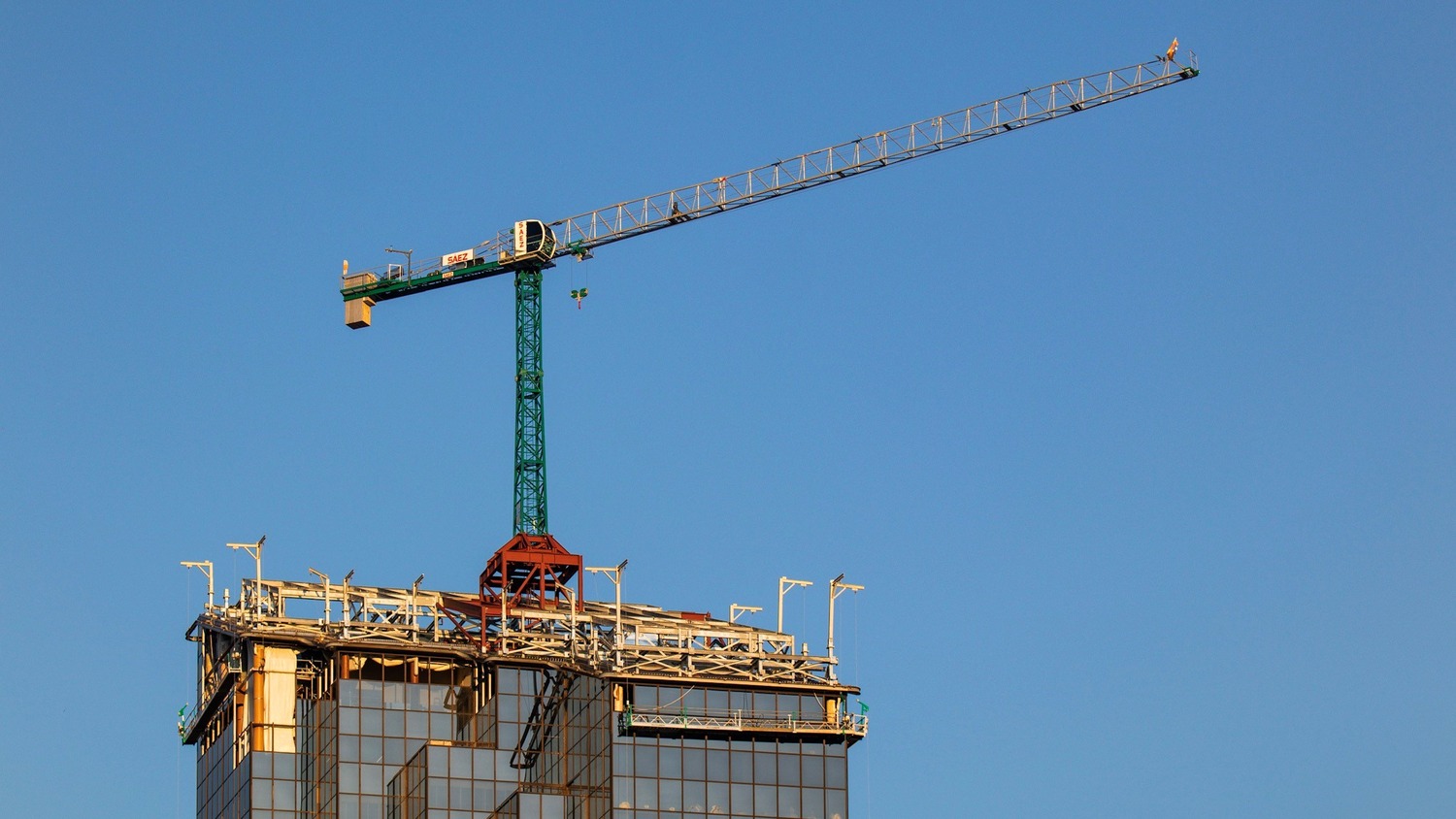
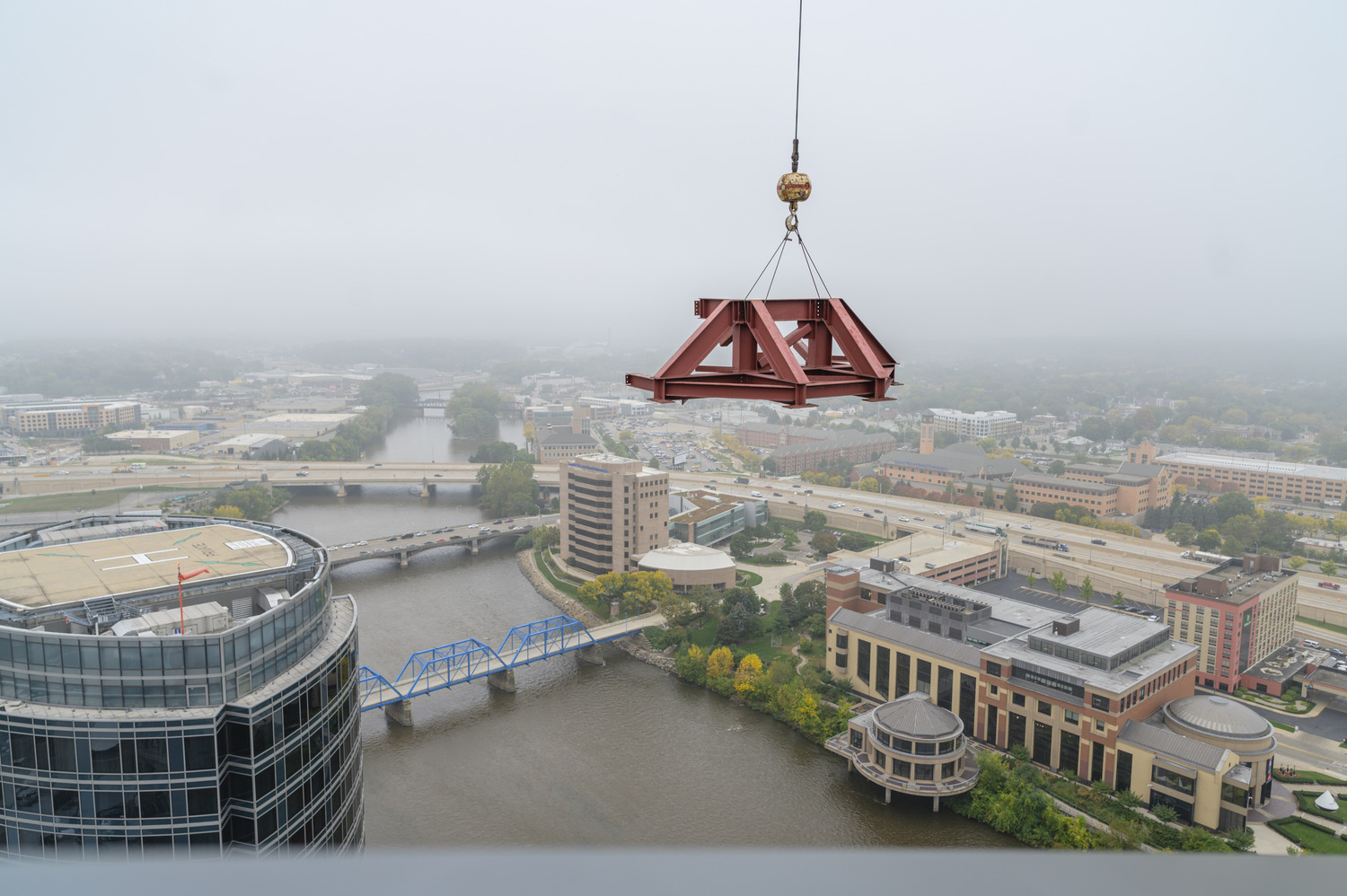
Rockford pioneered a first-ever top-down curtain wall installation approach in the United States. Rather than removing large sections at once, crews replaced one panel at a time, allowing guest rooms to remain occupied while work progressed. This required a custom-built crane installed at the top of the 30-story building. Workers used mast climbers and carefully designed connection details to install the new unitized system safely and efficiently.
The project came with additional challenges, such as the building’s riverfront location, which created unpredictable wind conditions with gusts funneled between surrounding buildings. To maintain safety, the team continuously monitored wind speeds and used 400-foot taglines to stabilize curtain wall panels during installation. As demolition progressed, existing structural embeds were inadequate for current wind-load requirements, requiring a redesign and installation of 4,923 new bolts across the building.
Both performance and appearance were transformed, with the new façade featuring floor-to-ceiling vision glass, improved thermal efficiency and a design that extends slightly outward to better shed water during construction. The building now stands ten feet taller, topped with a dynamic LED crown lighting system that enhances its presence in the skyline. Beyond aesthetics, the project set a new benchmark for the complexity of recladding in occupied high-rise buildings.
Corewell Health Place
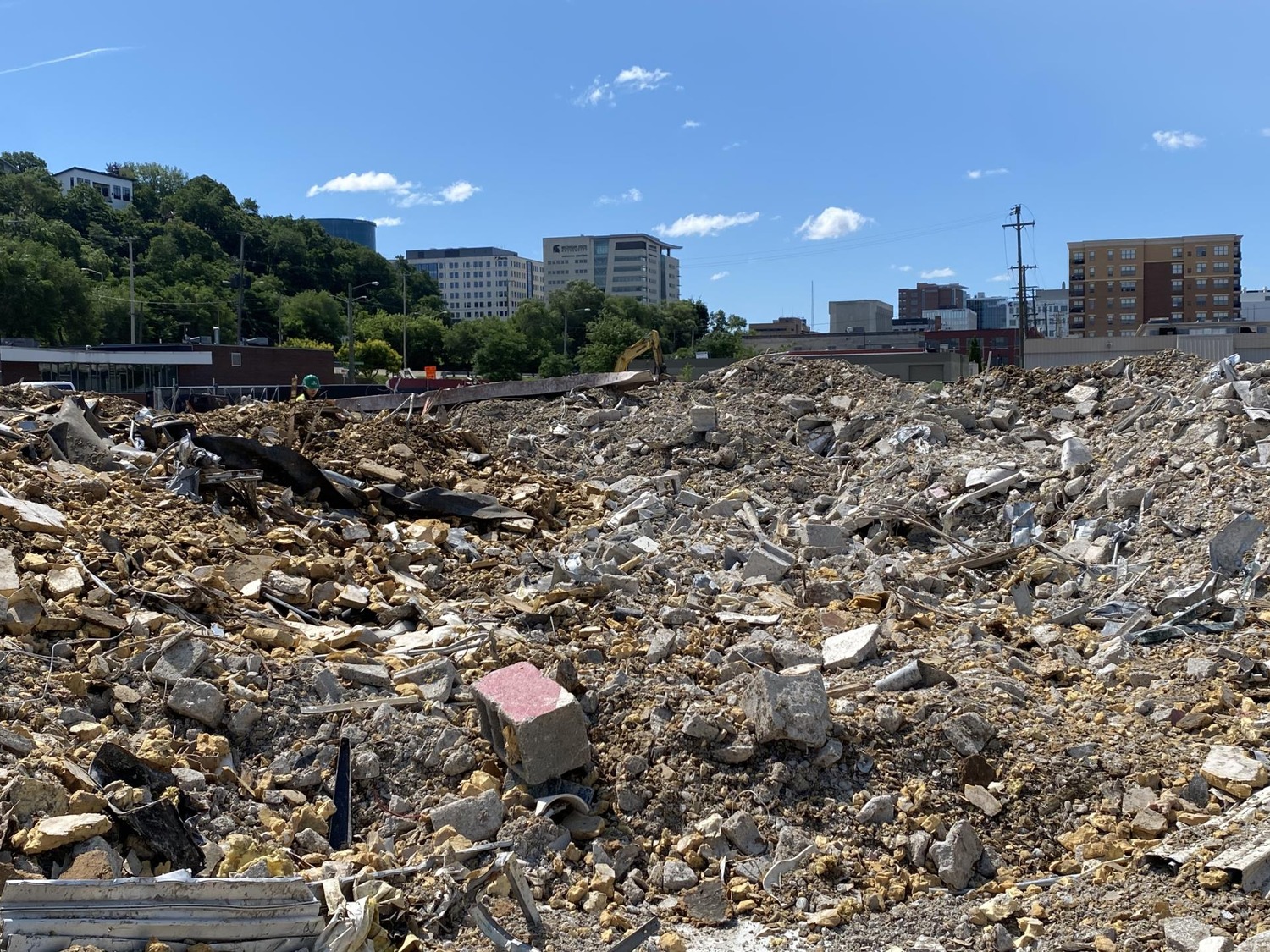
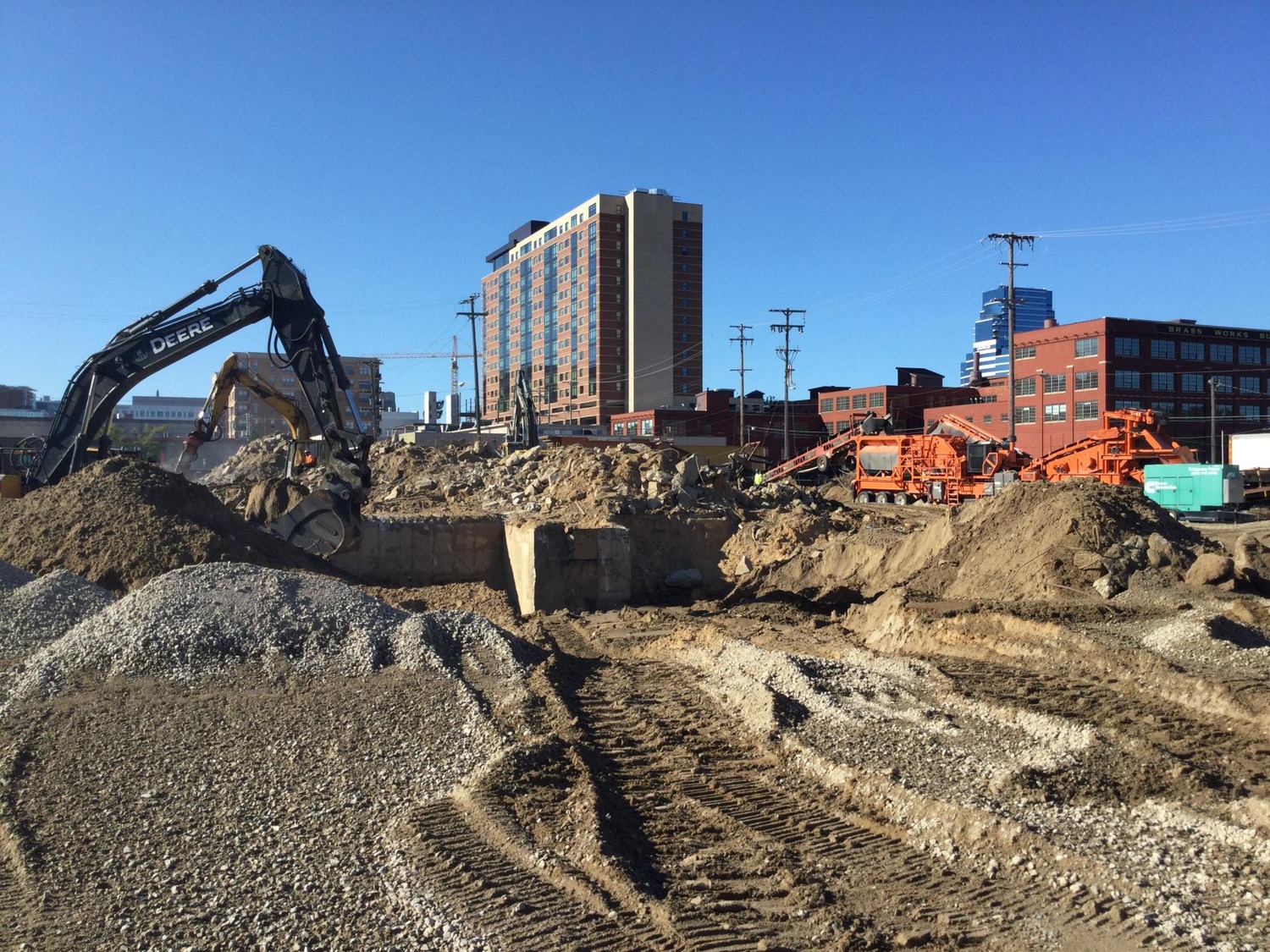
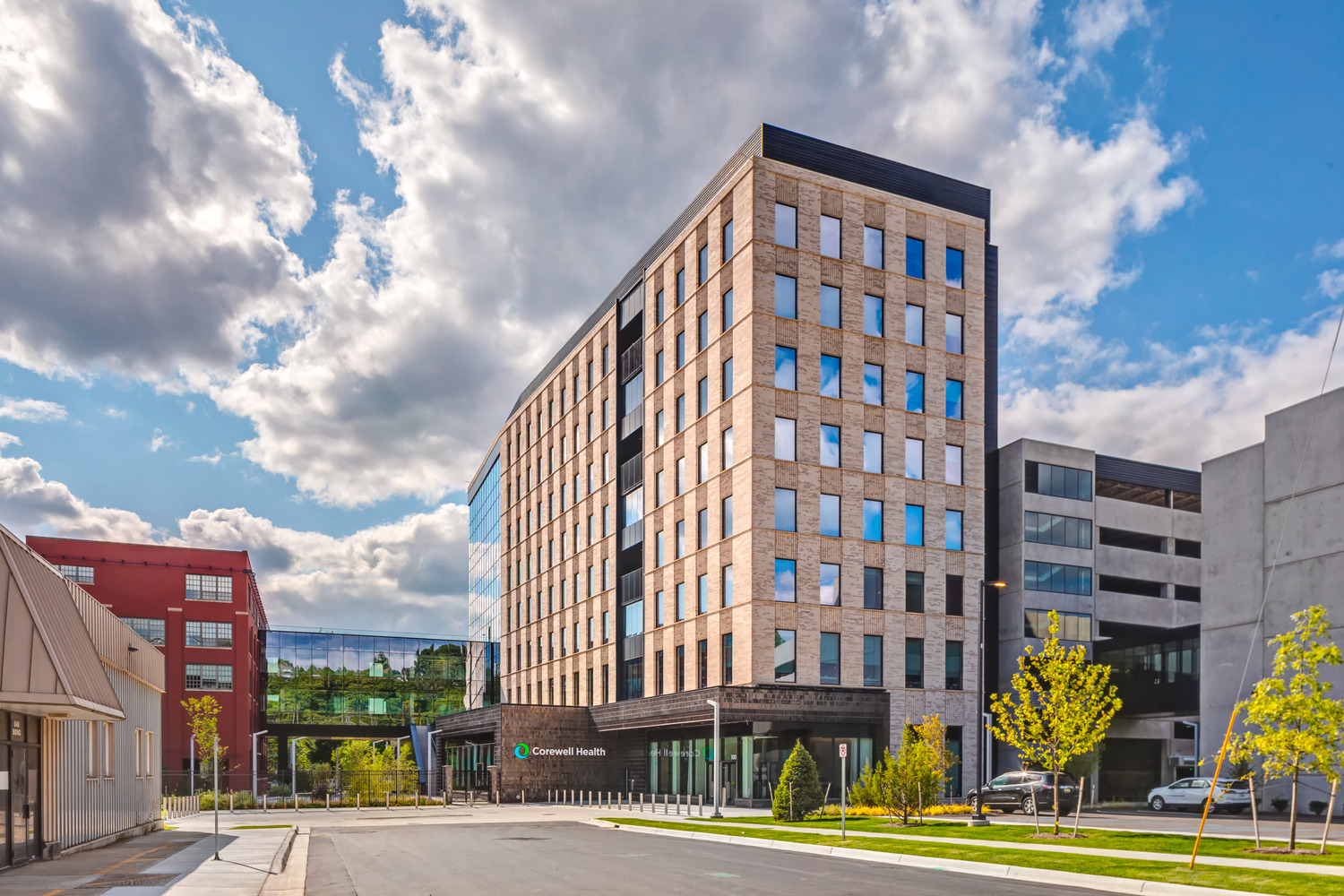
Corewell Health Place highlights Rockford’s dedication to sustainable outcomes. Built on the site of a former brass stamping plant, the project began with the removal of massive concrete foundations originally designed to support heavy industrial equipment. Instead of sending demolition debris to landfills, the team reused materials onsite where possible.
More than 20,000 tons of concrete — roughly twice the weight of the Eiffel Tower — were crushed and recycled for use in the new construction. In addition, 1,250 tons of steel and over 2,000 fluorescent light bulbs were recycled. Altogether, more than 94 percent of the materials from the existing facility were reused or diverted from landfills. This approach significantly reduced the need for trucking and new materials, cutting both costs and environmental impact while creating a cleaner, more efficient jobsite.
The finished Corewell Health Place campus consolidated multiple services into a cohesive hub centered on health and wellness. It includes an eight-story office building connected to a renovated four-story structure via a two-level bridge, along with new parking facilities and shared gathering spaces. Designed with both function and employee experience in mind, the campus also features amenities such as a fitness facility, collaborative learning spaces and large event areas.
Studio Park Tower & Lofts
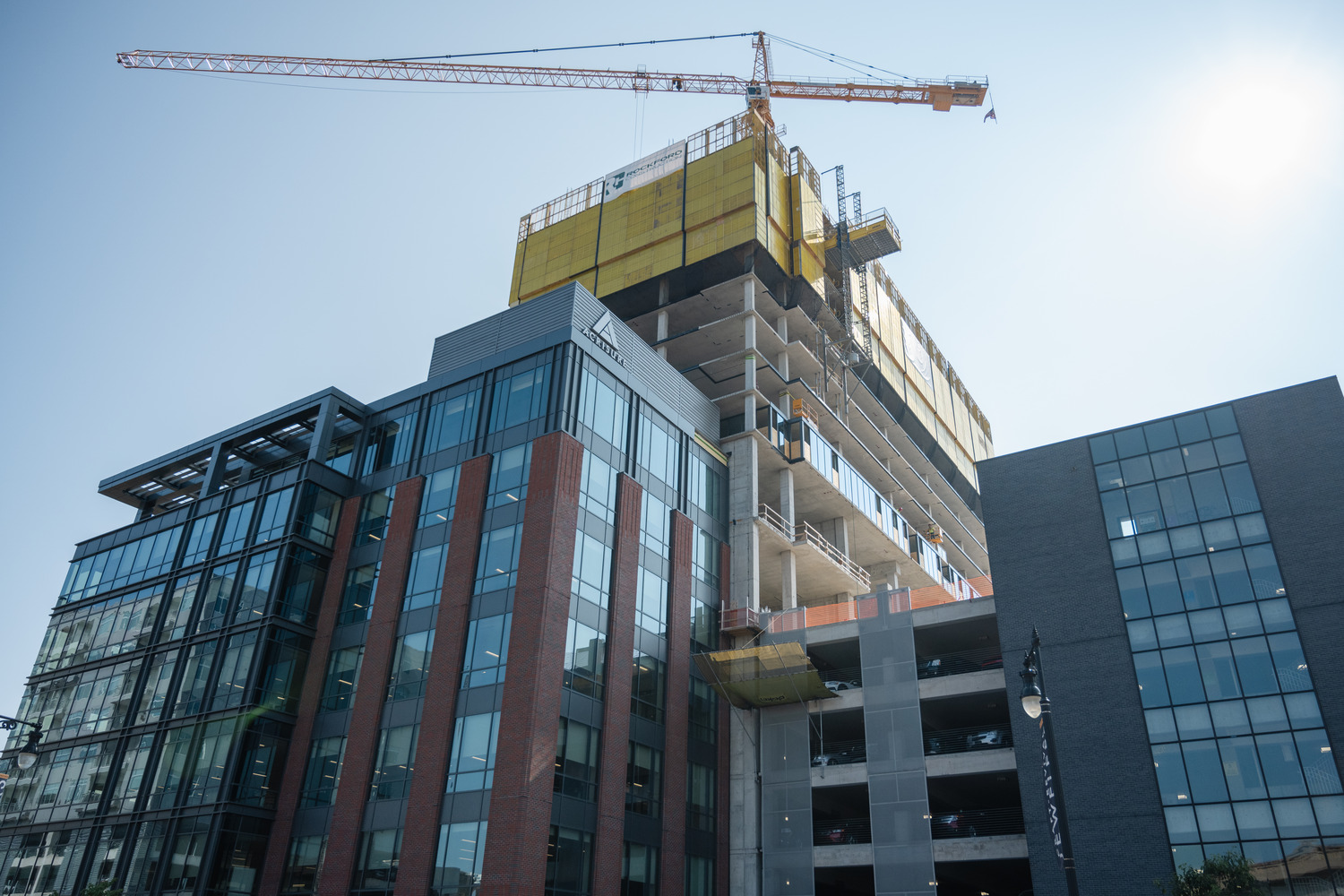
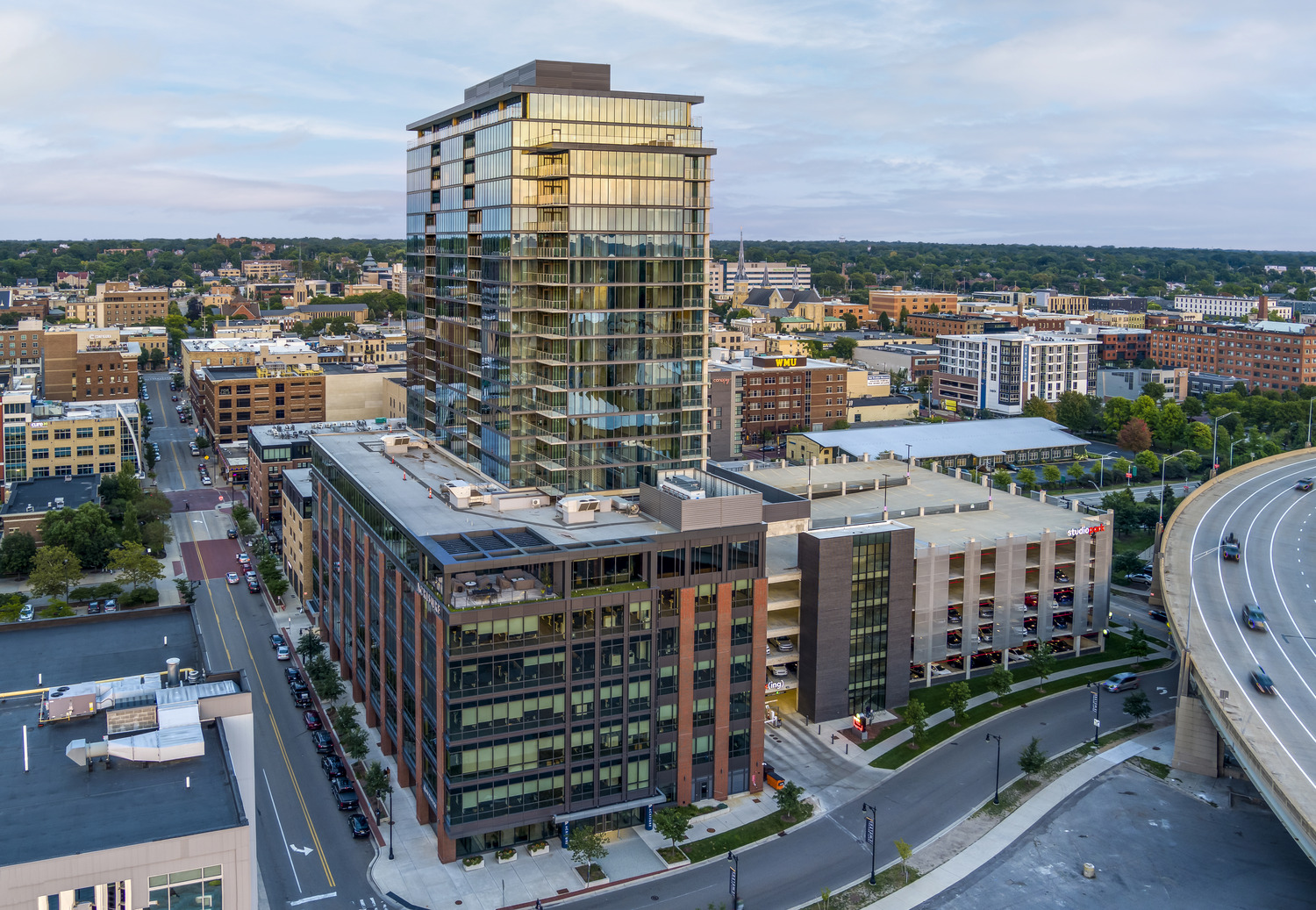
Studio Park presented a different kind of complexity: building vertically atop an active structure. Located in the heart of downtown Grand Rapids, the 22-story residential tower was constructed above an already existing six-level parking garage, requiring careful coordination to maintain daily operations while construction progressed.
Balancing construction activity within a busy urban environment required detailed planning and strong collaboration across all trades. The team scheduled work around peak traffic times and engaged trade partners early in the design process. Foreman-led pull-planning sessions kept the schedule tight and responsive, even as weather-related crane delays and complex waterproofing work added challenges. The project was successfully delivered ahead of schedule as a result of this careful coordination.
Now complete, Studio Park Tower & Lofts includes approximately 190 residential units, with a mix of apartments and customizable condominiums on the top floor. Residents have access to a wide range of amenities, including co-working spaces, a fitness center, a sauna, a competition-length pool and outdoor features such as a sundeck with a pickleball court. The project stands as a clear example of how vertical expansion can unlock new opportunities in dense urban settings without compromising existing infrastructure.
Together, these projects reflect a consistent approach: solving complex challenges through innovation, collaboration and forward-thinking strategies. Whether developing innovative approaches, maximizing material reuse to support sustainability goals or building atop active infrastructure, Rockford continues to redefine what is possible in high-rise development. In a growing city where every square foot matters, that ability to adapt and innovate shapes not just individual buildings but the future of the skyline itself.